Every reef tank has a ceiling, and it is rarely the number printed on the box. Two 200-litre systems can carry very different fish populations depending on how much live rock sits inside, how hard the skimmer works, how generously you feed, and whether your fish spend their days hiding in the rockwork or racing laps of the front glass. Before you fall for something in the shop, work through the same questions in order: volume, filtration, territory, adult size.
Start with the water your fish actually swim in
Manufacturers quote gross volume. Your fish live in the net figure, which is smaller than most people expect. Live rock, sand, the rear equipment chamber, the weir, and the few centimetres you leave at the top for a wave maker all displace water. A tank sold as 250 litres with a decent rock structure and a 4 cm sand bed can easily be holding closer to 190 litres of open water.
If you run a sump, add its usable volume, then subtract for baffles, equipment and any rock or media you keep down there. Once you have that number, write it on a sticky note and keep it in your head when you are browsing livestock. It is the figure that decides how many fish you can keep, not the one on the specification sheet.
Tank length matters as much as litres
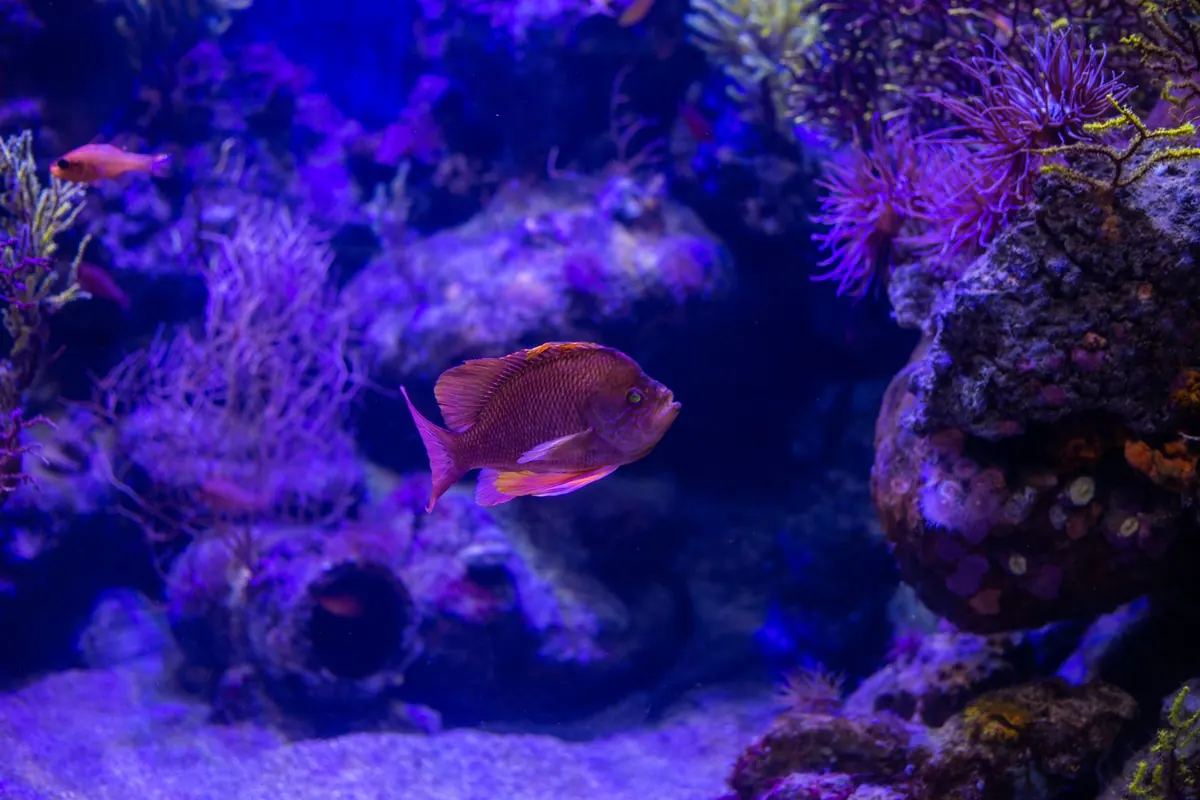
Volume tells you how much waste the system can process. Length and open swimming space tell you how the fish will behave. Active, open-water swimmers such as anthias and most tangs need horizontal run far more than they need depth. A tall, narrow 200-litre tank and a long, shallow 200-litre tank are not the same proposition.
Judge every fish by its adult size
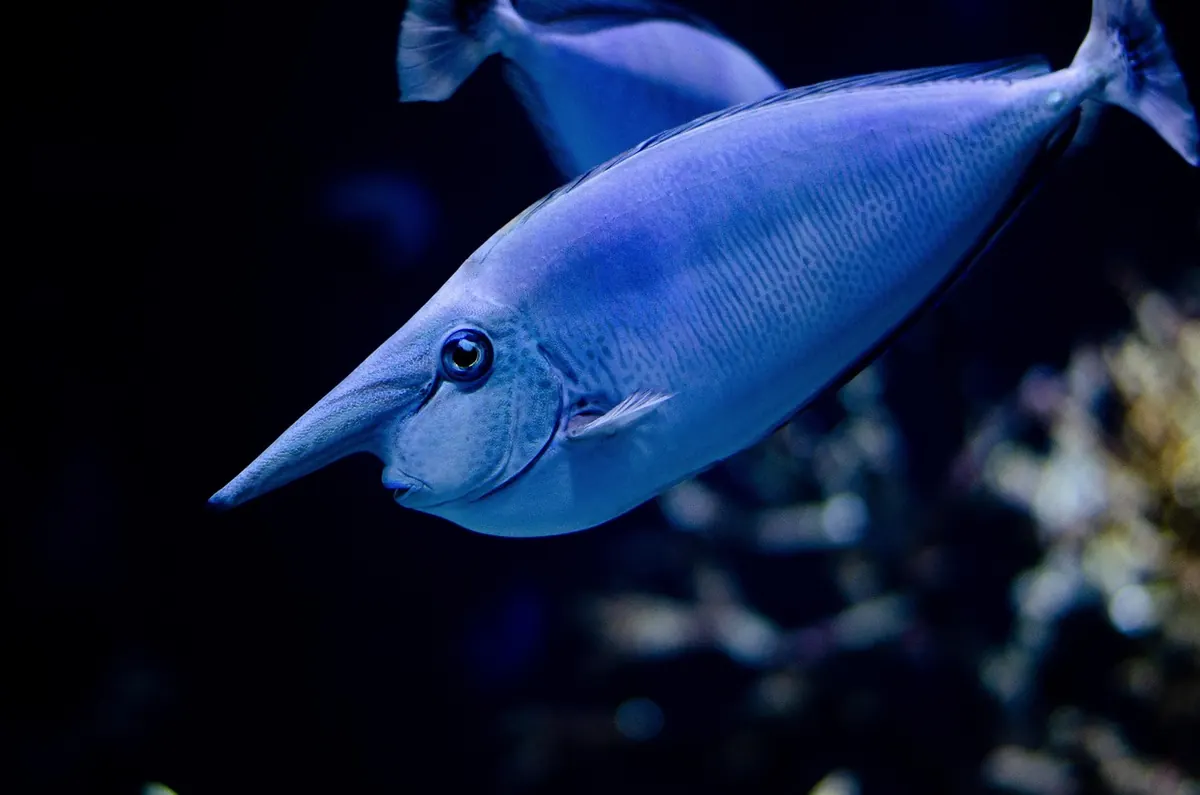
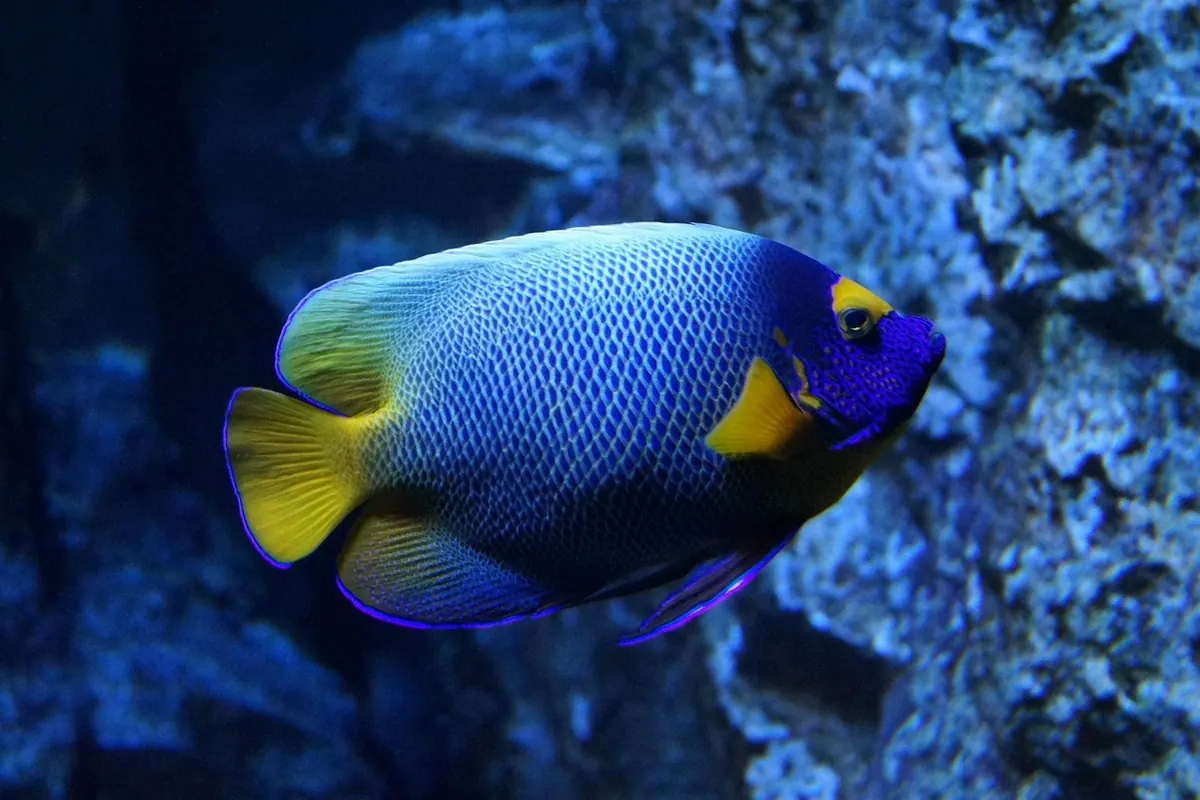
Almost every fish in a shop is a juvenile. That neat little tang browsing the rock, that dwarf angel, that grouper sitting quietly in the corner — several of these species reach the length of your hand or more, and they keep growing for years. Before buying, look up the maximum adult size for the species, not the specimen, and picture it fully grown in your tank with its fins spread.
A useful test: mentally multiply the fish in front of you by three, then ask whether you would still want two of them. If the answer is no, walk away. There is no shortage of smaller reef-safe options — gobies, blennies, small wrasses, cardinalfish, assessors and the smaller basslets all earn their place in modest systems and stay manageable.
The tank does not care how much you want the fish. It cares how much waste it can process and how much room each fish believes it owns.
Match filtration to the load, not the tank size
Filtration is the real limit on stocking. A skimmer, live rock, sand, a refugium, filter socks or rollers, and your water-change routine all work together as nutrient export. The input is food — frozen, flake, pellets, nori, coral foods — and every gram of it ends up as nitrate, phosphate and fish biomass.
Watch for the signals that you are already at capacity: nitrate and phosphate creeping upwards despite regular maintenance, film algae returning within a day, cyanobacteria patches on the sand, and a skimmer that needs emptying far more often than it used to. If you see those, the correct next purchase is more export capacity, not another fish.
Temperament and territory: the bit most plans skip
Three small fish can be far more trouble than five peaceful ones. Fish compete for zones as much as for space: some claim the rockwork, some hover above it, some graze the glass and back panel, and some patrol the open water. Two species that want the same zone in a small tank will argue, and the loser usually stops feeding.
Order of addition matters. Put the calmest, shyest fish in first so they settle and establish routines. Save the bold and territorial ones — dottybacks, damsels, hawkfish, clownfish defending a host, and larger tangs — for later, and add them last. Two tangs of similar shape and colour in a short tank is a recipe for trouble; if you must mix them, introduce them together, in a longer system, with plenty of grazing surfaces.
Your pre-purchase stocking checklist
- Know your net litres after rock, sand and equipment displacement.
- Check the adult size of every species on your list, not the shop size.
- Confirm swim zone — does it clash with fish you already keep?
- Check diet and feeding style. Grazers, plankton feeders and shy cave-dwellers need different routines.
- Ask what it eats in the wild. If you cannot supply something close, choose differently.
- Check reef safety. Many "reef safe with caution" fish earn that label eventually.
- Count your total planned fish and compare it to the number you can feed and export waste for.
- Plan quarantine before you buy, not after. A separate observation tank protects everything you already own.
- Decide the introduction date and leave a fortnight between additions so the biofilter can catch up.
A rough starting point for a reef of around 200 litres with good live rock and a capable skimmer is a handful of small fish — perhaps five or six modest species, with one slightly larger centrepiece. Treat it as a starting point, then let your test results and the behaviour you observe over the first year adjust it up or down.
Adding fish without knocking the system sideways
Add one fish at a time, quarantine it properly, and give the tank two to three weeks before the next arrival. Feed lightly for the first few days, test nitrate and phosphate weekly, and keep an eye on alkalinity if you are running a coral-heavy system — a heavier fish load means more acid production and more demand on your buffers.
Acclimatise carefully, keep the lights low for the first evening, and resist the urge to rush. If a fish turns out to be a bully, or grows faster than you expected, be prepared to move it on rather than let the whole tank suffer. The best-stocked reef tanks are not the ones with the most fish. They are the ones where every fish has space, a job in the water column, and a keeper who knows exactly why it is there.
Photo: MarcinCzerniawski / Pixabay