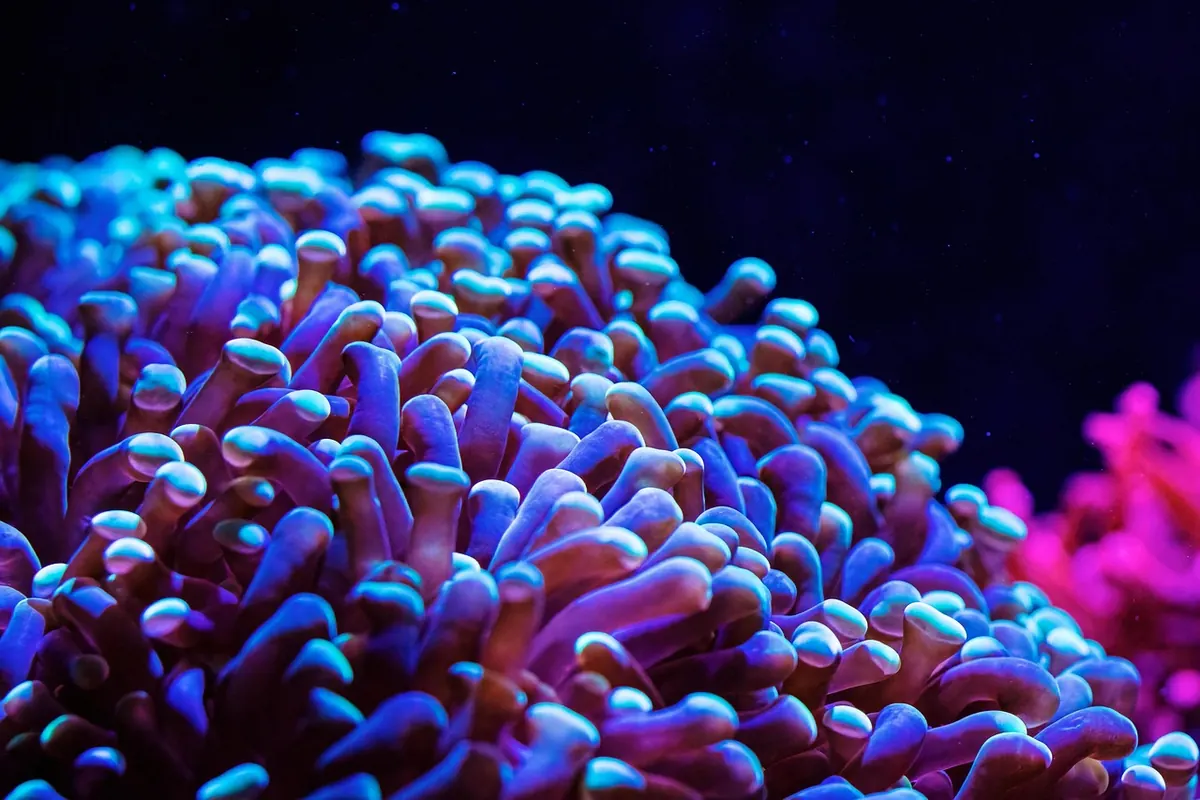
Walk into any reef shop and the coral tanks tend to be split down the middle. On one side, fat fleshy polyps the size of a thumbnail, swaying in the current. On the other, tight branching sticks with polyps so small you need to look closely to see them at all. Both build stony skeletons, both photosynthesise, and both can thrive in a home aquarium — but they ask for quite different things from you.
What the labels actually mean
LPS stands for large polyp stony, SPS for small polyp stony. The distinction is about the size of the polyp relative to the skeleton it sits in, not about difficulty. That said, difficulty broadly does follow the labels.
Typical LPS include Euphyllia (hammer, torch and frogspawn), Caulastrea, Lobophyllia, Trachyphyllia and Duncanopsammia. Typical SPS include Acropora, Montipora, Seriatopora, Stylophora and Pocillopora, along with a range of encrusting species that spread quietly across rock.
Flow: gentle movement versus chaotic energy
LPS corals come from lagoons, sheltered reef flats and crevices. Their polyps are soft and inflated, and they don't appreciate being blasted. Aim for indirect, alternating flow — a torch coral should sway and ripple, not flap like a flag in a gale. If tissue starts lifting from the skeleton, or a coral stays retracted for days on end, the pump is probably aimed too directly. Pointing a powerhead at the front glass and letting the flow bounce back works surprisingly well.
SPS corals come from the reef crest and upper slopes, where water surges back and forth. They want strong, chaotic, alternating flow that shifts direction. It strips mucus and detritus from between branches, supports gas exchange and encourages dense, sturdy growth. As a rough guide, SPS-dominant tanks often run at twenty to forty times the tank volume per hour, while LPS-heavy setups are happy at half that. Detritus settling in the crotches of a branching SPS, or pale, recession-prone bases, usually mean flow is too low.
Light: different appetites
This is where most new keepers get caught out. SPS want a lot of light; many LPS will bleach under the same intensity.
- SPS: most Acropora, Montipora and Seriatopora do best high on the rockwork under strong LED or T5 lighting. Expect to acclimatise new frags over several weeks by starting them low and raising them gradually.
- LPS: many are happiest on the sand bed or on lower rock. Trachyphyllia, Lobophyllia and Acanthophyllia often sit directly on the substrate. Euphyllia and Duncanopsammia will take moderate light, but rarely the intensity an Acropora wants.
A PAR meter removes the guesswork, but you can also read the corals. SPS that are browning out or stretching are usually light-hungry. LPS that shrink, pale or expel their zooxanthellae are usually getting too much.
Feeding: how much work do you want?
Both groups get most of their energy from their symbiotic algae, so neither depends on you for survival. LPS, however, are built for catching food, and target feeding pays off in faster growth and better colour.
- Turn off the return pump and powerheads so the food stays put.
- Mix a small amount of mysis, krill or chopped prawn in tank water.
- Use a pipette or turkey baster to deliver a little to each polyp.
- Give them twenty to thirty minutes to close over the food.
- Siphon or net out anything uneaten, then restart the flow.
Once or twice a week is plenty for most LPS. SPS take much finer fare — phytoplankton, rotifers and amino acid supplements can help in very nutrient-poor systems, but they aren't a substitute for stable water chemistry. Remember that every feed adds nutrients, so feeding heavily means exporting heavily too, through a skimmer, refugium or regular water changes.
Water stability: the real dividing line
LPS tolerate a degree of variation. SPS do not. A tank that drifts from 7 to 9 dKH over a day might annoy your hammer coral; it can strip the tissue off an Acropora overnight.
For SPS you're aiming for consistency above any particular number. Many keepers settle around 7–9 dKH alkalinity, 400–450 ppm calcium, 1300–1400 ppm magnesium and salinity held steady with an auto top-off. Nitrate and phosphate want to be present but low — not zero, which starves corals and invites nuisance algae.
Practically, that means a dosing pump or kalkwasser top-off rather than hand-dosing, a decent test kit and a routine. Test alkalinity every few days while you learn your tank's consumption, then weekly once it's predictable. LPS will forgive a missed test. SPS rarely do.
Growth, aggression and placement
SPS grow quickly and spread into open space, shading whatever sits beneath them. They also snap easily, which is good news if you want to frag and share. LPS grow more slowly but defend themselves fiercely: Euphyllia, Galaxea and many faviids extend sweeper tentacles at night that can sting neighbours several centimetres away.
In a mixed tank, put SPS high and LPS low, and keep a generous buffer between Euphyllia colonies so sweepers can't reach. Mounting LPS on isolated rock islands is a simple way to stop territorial disputes before they start.
Which should you choose?
There's no wrong answer, only a question of what suits your tank and your routine.
- New to stony corals? Start with LPS. Caulastrea, Duncanopsammia and most Euphyllia are forgiving, colourful and rewarding to feed.
- Tank younger than six months? Let it mature. SPS benefit enormously from a settled bacterial population and stable parameters.
- Short on time? LPS tolerate manual dosing and a relaxed testing schedule far better than SPS.
- Chasing structure and growth? SPS give you the branching reefscape look, and they'll fill space within a year or two.
- Keeping angelfish or butterflyfish? Many will nip LPS flesh. Research your fish before you spend money on fleshy corals.
A practical starting point
Begin with two or three hardy LPS on the sand bed, get your alkalinity and salinity holding steady for a couple of months, and only then add a tough SPS such as Montipora capricornis, Stylophora or Seriatopora high on the rock. Buy aquacultured frags where you can, dip and inspect everything before it goes in, and keep a simple log of test results so you can spot a trend before it becomes a problem. Most reef keepers end up with a mix of both groups — just let the tank tell you when it's ready.
Photo: jbooba / Pixabay