Algae is the most reliable thing you will ever grow in a reef tank. Add light, food and seawater to a box of rock and something will colonise it. A clean-up crew is how most of us keep that growth tidy: snails, crabs and shrimp that graze, sift and scavenge while you get on with the rest of the hobby. Choose the mix well and the tank largely looks after itself. Choose badly and you end up with hermits fighting over shells and rock that has been nibbled bare.
What a clean-up crew really does
These animals are not a filter, and they are not a fix. They eat. Give them the right things to eat and they work quietly in the background. Give them too little and they starve. Give them too much and you have simply added more livestock to a system that already has a nutrient problem.
What they are genuinely good at:
- Cropping film algae from rock, glass and equipment
- Turning over the top layer of sand and consuming detritus trapped in it
- Clearing uneaten food and fish waste before it breaks down
- Reaching into gaps you cannot get to with a scraper
What they cannot do is lower phosphate, replace water changes, or clear long, stringy hair algae. Most grazers leave that alone once it gets a hold, which is why the crew should sit alongside sensible feeding and nutrient export rather than instead of it.
Snails: the backbone of any crew
If you only buy one group of animals, buy snails. They are cheap, they do not fight, they do not steal shells, and most of them spend the whole day working.
Rock and glass grazers
Trochus snails are the best all-rounder for most reefs. They eat film algae from rock and glass, they can right themselves if they fall, and they often spawn in mature tanks. Turbo snails are bigger and clear more per animal, but they bulldoze loose frags and frequently cannot turn over if they land upside down. Astraea are efficient on rock but need placing carefully for the same reason. Nerites do excellent work on glass; the small white egg capsules they leave behind are harmless, just not pretty. Stomatella usually arrive free on live rock, breed readily and are a genuine bonus.
Sand, detritus and leftovers
Cerith snails work the sand surface and the lower glass, and their small size lets them into tight spaces. Nassarius snails live beneath the sand and appear in a rush at feeding time, hunting down leftovers. A single fighting conch suits a mature tank with a decent sand bed, though it needs space and food to match. Bumblebee snails are best avoided unless you know what you are doing: they are predators of other snails and small worms rather than cleaners.
Crabs: useful scavengers with a catch
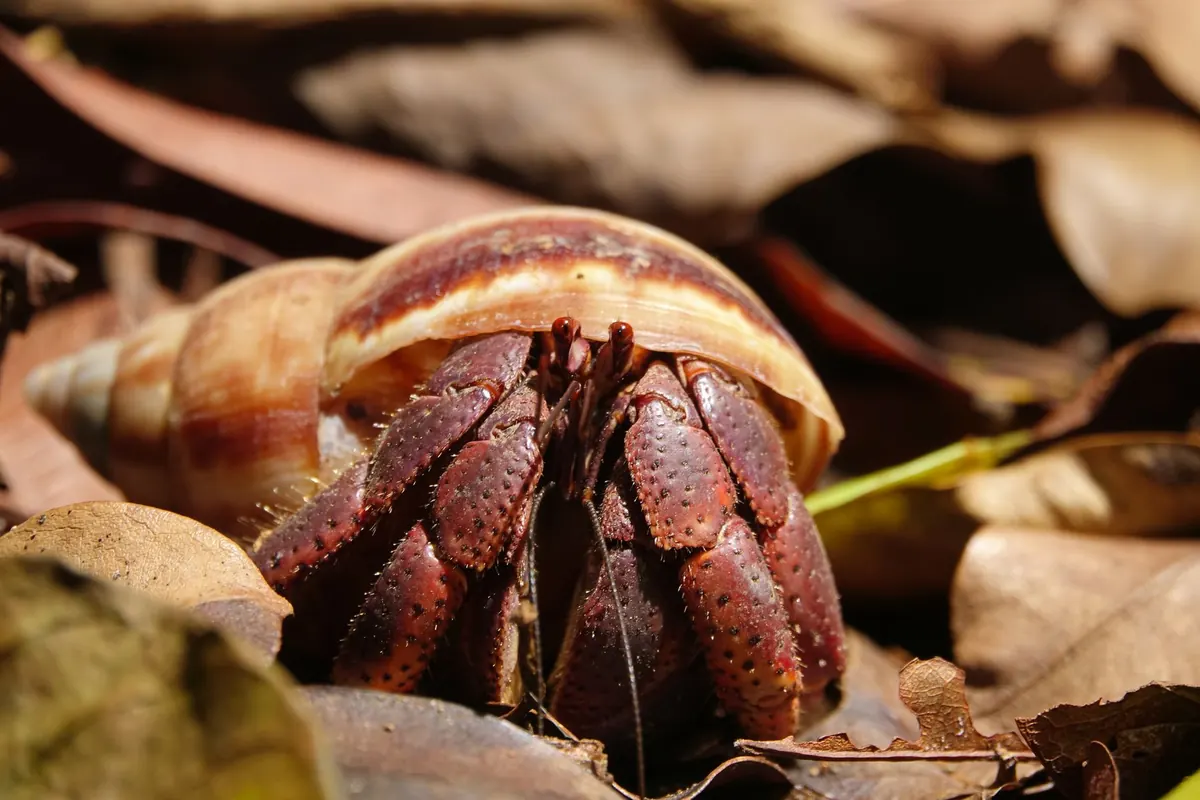
Hermits are the animals most people picture, and the ones most likely to annoy you. Blue-legged hermits graze and scavenge constantly, but they grow and need larger shells. If you do not provide empty shells of the right size, they will take them from your snails. Scarlet hermits tend to be gentler, though the same rule applies. Emerald crabs are hit and miss with bubble algae, and individuals vary: some ignore it, some eat it, and a few develop a taste for coral tissue.
Other crabs worth knowing about: pom-pom crabs are small filter feeders that do little harm, Sally Lightfoot crabs are fast and aggressive and best avoided in a small tank, and any unidentified crab that arrives on live rock should be treated as a suspect. Gorilla crabs and their relatives eat whatever they can catch.
Going crab-free is a perfectly respectable choice. Hermits are optional; grazing snails are not.
Shrimp: the detail workers
Shrimp contribute little to algae control, but they handle fine detail. Skunk cleaner shrimp are bold, visible and will take food from your fingers; they also pick at leftover food around corals. Blood and fire shrimp are far shyer, often staying in a cave with only antennae showing. Lovely, but not much of a worker.
Peppermint shrimp are the ones usually sold for aiptasia control, and results are mixed. Several similar species are sold under the same name and only some are reliable. They can also nip at LPS flesh, particularly when underfed. Add one or two, watch what they actually do, and be ready to move them to the sump if they misbehave. Pistol shrimp are a different proposition: they pair with a goby, dig extensively, and are better thought of as a display feature. Coral banded shrimp look spectacular and can be territorial with smaller shrimp.
How many, and in what mix
As a rough starting point for a mature tank, around one grazing snail per 10–15 litres of water is reasonable, then adjust based on what you see. Rock stripped bare means too many animals for the available food. Algae everywhere usually means too few, or a nutrient problem no snail can solve. Add livestock slowly:
- Start with grazing snails, then add sand-dwelling species once the tank is settled.
- Add a small number of hermits if you want them, with spare shells in two or three sizes.
- Add shrimp last, once feeding is predictable and the tank is stable.
- Leave everything for a fortnight and watch before adding more.
Older tanks often support fewer grazers than you would expect, simply because there is less algae left to eat. Snails that run out of food die quietly, and their empty shells are easy to miss.
Acclimatisation, quarantine and the boring bits
Snails are sensitive to rapid changes in salinity and pH, so drip acclimatise them over 45 to 60 minutes and never tip shop water into the tank. Crabs and shrimp are more tolerant but still benefit from a slow introduction. Quarantine them if you have a spare tank; if not, inspect shells and bodies for hitchhikers. Copper-based treatments will kill them, and very high nitrate levels shorten their lives considerably.
Keeping the crew working
A clean-up crew is not a one-off purchase. Count your snails every few weeks, top up shells for the hermits, and replace losses rather than assuming they are hiding. Feed lightly, keep up with water changes, and let a skimmer or refugium deal with nutrients so the animals can stick to eating. When snails start dying off, treat it as a signal to check your water rather than a reason to buy more. Build the crew slowly, keep the mix varied, and the boring parts of reefkeeping get noticeably easier.
Photo: Adrien Stachowiak / Pexels